Join this session for a refresher on how extreme heat affects MNCH, backed by the latest evidence, and hands-on examples of promising interventions and tools to inform your MNCH heat and health strategy.
Rising global temperatures are putting pregnant and postpartum women, newborns, young children, and the health workers who care for them at risk. Pregnant women who suffer from heat exposure are at higher risk of giving birth to a preterm baby, a stillborn baby, a newborn with low birthweight, birth defects, and gestational diabetes. They are also more likely to suffer from hypertensive disorders during their pregnancy.
Yet the impact of heat exposure on MNCH remains overlooked in heat health action plans and climate action.
Using engaging, interactive formats, this session will identify priority actions to integrate MNCH into climate change and health efforts across policy, programming, research, and monitoring. It will look at what decision makers, health workers and advocates can do, at different levels of the health system and in their respective programmes, to reduce the impact of heat exposure on pregnant and postpartum women, newborns, young children and health workers.
Countries will share what steps they have taken, and what tools they are using to reduce heat-health impacts on this vulnerable population.
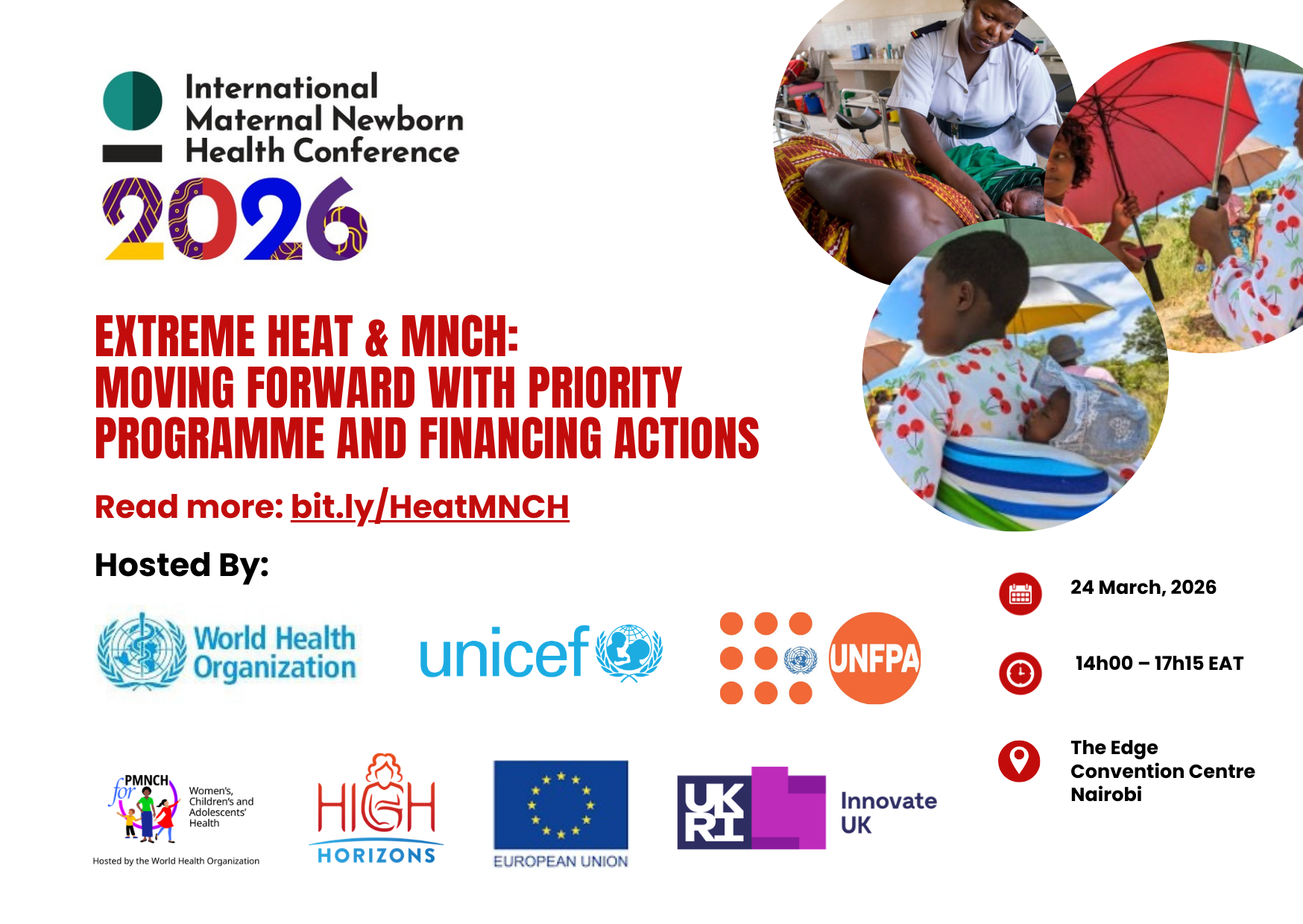
Join this session for a refresher on how extreme heat affects MNCH, backed by the latest evidence, and hands-on examples of promising interventions and tools to inform your MNCH heat and health strategy.
Rising global temperatures are putting pregnant and postpartum women, newborns, young children, and the health workers who care for them at risk. Pregnant women who suffer from heat exposure are at higher risk of giving birth to a preterm baby, a stillborn baby, a newborn with low birthweight, birth defects, and gestational diabetes. They are also more likely to suffer from hypertensive disorders during their pregnancy.
Yet the impact of heat exposure on MNCH remains overlooked in heat health action plans and climate action.
Using engaging, interactive formats, this session will identify priority actions to integrate MNCH into climate change and health efforts across policy, programming, research, and monitoring. It will look at what decision makers, health workers and advocates can do, at different levels of the health system and in their respective programmes, to reduce the impact of heat exposure on pregnant and postpartum women, newborns, young children and health workers.
Countries will share what steps they have taken, and what tools they are using to reduce heat-health impacts on this vulnerable population.
Amethyst Tent International Maternal Newborn Health Conference 2026 information@imnhc.org
Technical Issues?
If you're experiencing playback problems, try adjusting the quality or refreshing the page.
Questions for Speakers?
Use the Q&A tab to submit questions that may be addressed in follow-up sessions.